


Why You Never Feel Good Enough: Understanding Perfectionism in Therapy
You might not think of yourself as a perfectionist.
Many clients ask me, “How can I be a perfectionist if nothing I do ever feels perfect?”
And yet, underneath the achievements and the long to-do lists, there can be a persistent sense that you never feel good enough.
Perfectionism isn’t always about flawless results. Often, it’s the pressure to keep going, to improve, to stay one step ahead of mistakes. From the outside, you look capable and successful but inside, you’re constantly battling the fear of not being good enough.
Why You Never Feel Good Enough (Even When You Achieve)
For many high-achieving women, perfectionism is less about perfection and more about self-worth.
The critical voice inside your head says:
- “I should be doing more.”
- “I can’t let anyone down.”
- “If I slow down, I’ll fall behind.”
Even when you achieve something significant, the relief is fleeting. Your mind quickly moves to the next target, the next improvement, the next way you might be falling short.
Over time, this creates a painful cycle of feeling not good enough, no matter how much you accomplish. It becomes exhausting to live in a state of constant self-evaluation.
The Fear of Not Being Good Enough Behind Perfectionism
There is nothing wrong with caring a lot about your work or wanting to do well. Ambition and determination are strengths.
The difficulty begins when your standards become unrelenting, rest feels undeserved, mistakes feel catastrophic and your sense of worth rises and falls depending on performance.
This is when anxiety shows up, you get locked into overthinking and decision making feels challenging, you delay or avoid tasks because you fear not doing them well enough and you push yourself through exhaustion rather than pausing to rest.
Striving for perfection can feel exhausting and overwhelming. There’s always the next thing to move onto, the next goal to achieve.
At its core, unhealthy perfectionism is often driven by the fear of not being good enough; not intelligent enough, not successful enough, not likeable enough, not attractive enough.
When that fear is running the show, even success can feel hollow.
You Don’t Have to Eliminate Your Drive
Perfectionism is not a character flaw, it’s a behavioural trait which often develops in our early lives. Perhaps striving brought praise, safety, or a sense of control. Maybe achieving became a way to cope with not feeling good enough.
Therapy can help with perfectionism, not by trying to take away your ambition or lower your standards. Instead, by gently exploring the beliefs that sit beneath them.
- Where did you learn that you had to prove yourself?
- What happens internally when you make a mistake?
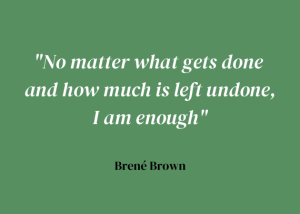
- What would it mean if you were already enough?
Therapy offers space to understand the pattern without judgment, to soften the harsh inner voice and to build a steadier sense of self-worth that is not dependent on constant achievement.
Moving Toward a Healthier Relationship With Yourself
The goal is not to stop caring. It is to care about yourself in the process.
That might look like:
- Practising “good enough” rather than perfect
- Allowing yourself to rest without earning it
- Noticing when your thoughts drift into old narratives of never feeling good enough
These shifts can feel uncomfortable at first. When you’ve spent years striving, slowing down can feel risky. But over time, many clients find that their motivation becomes more sustainable; they still achieve, they still care but they are no longer driven solely by the anxiety of feeling not good enough.
A Final Thought
If you recognise yourself here, you’re not alone. So many capable, intelligent women carry the quiet burden of not feeling good enough, even when their lives look impressive on paper.
You don't have to keep proving your worth through exhaustion.
If you’re feeling worn out by high standards and the constant pressure to do more, therapy can help you find a gentler balance. A way to keep your drive and determination without being ruled by the fear of not being good enough.
If this resonates with you, I invite you to take the next step.
Book a free 15-minute consultation call with me to discuss what it is you are looking for and to see if I might be the right person to support you.
There’s no pressure, just a space to explore what has been going on for you and what could help.